Weasel Words in Education Part 5: Rigour

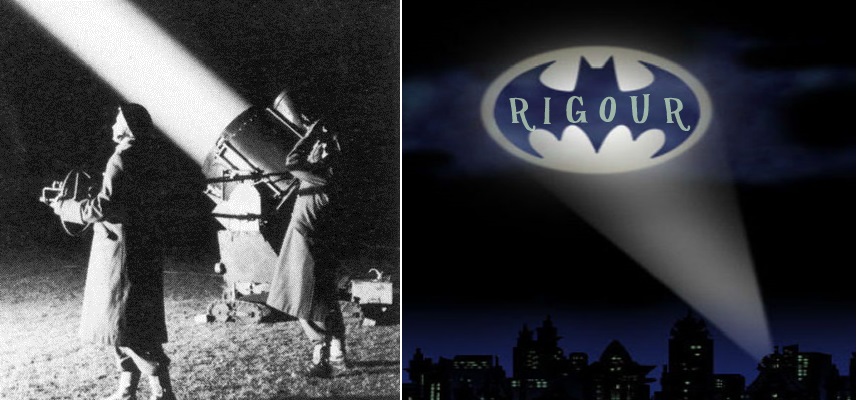
A crack team of DfE boffins test the proposed new system for the management and oversight of the United Kingdom’s increasingly fissiparous school system.

Rigour, n.

1. The quality of being extremely thorough and careful.

2. severity or strictness.

3. (when pluralized) harsh and demanding conditions

In education (as in other walks of life) the word rigour is usually meant in sense (1) when applied to one’s own thinking or the thinking of one’s friends or allies: “I am being rigorous. However, you, sir, are merely pedantic.”

These days, sense (2) seems to require the insertion of a prefix, as in “The moderation of our controlled assessments was over-rigorous.”

Rigour is therefore a good thing, right?

However, in my opinion it seems to be used more and more as a talisman rather than as a genuine description.

Mr Gove told the Commons: “The new specifications are more challenging, more ambitious and more rigorous. That means more extended writing in subjects like English and history, more testing of advanced problem-solving skills in mathematics and science.”

The Independent, July 2013

I am not sure if Michael Gove* is using the word in sense (1) or sense (2) here. If he meant it in sense (2) then it is a rhetorical flourish to emphasise the idea that GCSEs will be more challenging. If he meant it in sense (1) then the promise of “extended writing [and] more testing” doesn’t tell me how the new exams will be more thorough and careful. This is not saying that the examination system does not need to be more thorough and careful, merely that “extended writing [and] more testing” won’t necessarily make it so.

Let me emphasise that I am not opposed to rigour. I like rigour and being rigorous, at least in sense (1). I would perhaps favour the words consistent and fair rather than use rigour in sense (2) in an educational context, but that’s a personal preference.

In short, I wish people would be more rigorous in their use of the word rigorous. You shouldn’t just use it because you think it sounds good. A is rigorous while B is not should mean more than I like A and dislike B.

And as a final thought, I strongly suspect that many of the people who are most keen to bemoan the lack of rigour in education would have to step out of the kitchen when push came to shove, as in this little vignette:

[I listened] to magazine columnist Fred Barnes . . . whine on and on about the sorry state of American education, blaming the teachers and their evil union for why students are doing so poorly. “These kids don’t even know what The Iliad and The Odyssey are!” he bellowed, as the other panellists nodded in admiration at Fred’s noble lament.

The next morning I called Fred Barnes at his Washington office. “Fred,” I said, “tell me what The Iliad and The Odyssey are.”

He started hemming and hawing. “Well, they’re … uh … you know … uh … okay, fine, you got me—I don’t know what they’re about. Happy now?”

No, not really. You’re one of the top TV pundits in America, seen every week on your own show and plenty of others. You gladly hawk your “wisdom” to hundreds of thousands of unsuspecting citizens, gleefully scorning others for their ignorance.

— Michael Moore, Stupid White Men (2001), p.58


* His successor Nicky Morgan look set to continue Gove’s use of the term.

Postscript: For the those (including myself) who are classically undereducated: The Iliad is an ancient Greek epic poem by Homer about the Trojan War. The Odyssey is another epic poem by Homer recounting the ten-year journey home from the Trojan War made by Odysseus, the king of Ithaca.
The Twelve Physics Pracs of Gove (Part Two)

A true-devoted pilgrim is not weary
To measure kingdoms with his feeble steps

–William Shakespeare, The Two Gentlemen of Verona


A picture [of reality]  . . .  is laid against reality like a measure  . . .   Only the end-points of the graduating lines actually touch the object that is to be measured  . . .   These correlations are, as it were, the feelers of the picture’s elements, with which the picture touches reality.

–Ludwig Wittgenstein, Tractatus-Logico-Philosophicus 2.141-2.1515


What they say of disc jockeys is also true of teachers: that someone, somewhere will remember some of your words forever; or, at least, for the duration of their lifetime. The downside is, of course, that you never know which of your words are going to be remembered. The wittily-crafted, near-Wildean aphorism pregnant with socratic wisdom — probably not. The unintentionally hilarious malapropism that makes you sound like a complete plonker — almost certainly.

To this day, I still remember Dr Prys’ sharp and appropriate response to a flippant comment (possibly from the callow 6th form me) about whether the scientific constants listed in the data book were truly trustworthy: “Look,” he said, “people have dedicated their whole lives to measuring just one of these numbers to one extra decimal place!” True devoted pilgrims indeed, mapping out the Universe step by tiny step, measurement by measurement.

I have written before on what I consider to be the huge importance of practical work in Physics education. Without hands-on experience of the hard work involved in the process of precise measurement, I do not believe that students can fully appreciate the magnificent achievement of the scientific enterprise: in essence, measurement is how scientific theories “touch” reality.

I am encouraged that parts of this view seem to be shared by the writers of the Subject Content guidance. (All hail our Govean apparatchik overlords!)

Of course, this has to be balanced with the acknowledgement that (as I understand it at least) teacher-assessed practical work will no longer count towards a student’s final exam grade. Many are concerned that this is actually a downgrading of the importance of practicals in Science and thus a backward step.

Sadly, they may turn out to be right: “We have to have this equipment for the practical/controlled assessment!” will no longer be a password for unlocking extra funding from recalcitrant SLTs (and from the exam budget too — double win!)

And, undoubtedly, some “teach-to-the-test” schools will quietly mothball their lab equipment (except for the showy stuff — like the telescope that no-one knows how to use — that they bring out for prospective pupil tours).

That would be sad, and although the DfE have, to be fair, nailed their pro-practical colours to the mast, we all know that the dreaded Law of Unintended Consequences may have the last laugh.

I would say it all depends on how the new A levels are actually put together. I will be attending some “launch events” in the near future. I will blog on whether I think we can expect an Apollo 11 or an Apollo 13 at that time.

In the meantime, I will be setting practicals galore as usual, as I’m old-fashioned enough to think that they give a lovely baroque feel to a scheme of work…

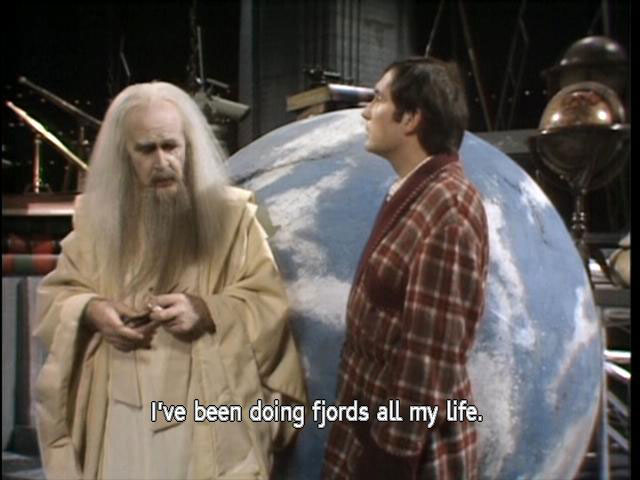
Look at me, I design coastlines, I got an award for Norway. Where’s the sense in that? None that I’ve been able to make out. I’ve been doing fiords all my life, for a fleeting moment they become fashionable and I get a major award. In this replacement Earth we’re building they’ve given me Africa to do, and of course, I’m doing it will all fjords again, because I happen to like them. And I’m old fashioned enough to think that they give a lovely baroque feel to a continent. And they tell me it’s not equatorial enough…
–Slartibartfast, from The Hitch-Hikers Guide to the Galaxy by Douglas Adams

image

The Twelve Physics Pracs of Gove (Part One)

It’s not often that a DfE publication makes me feel like Kent Brockman, the newsreader from The Simpsons.

I’d like to remind them that as a trusted TV personality, I can be helpful in rounding up others to toil in their underground sugar caves.
Kent Brockman: “I, for one, welcome our new insect overlords.”

This feeling stems from reading the “Use of apparatus and techniques – physics” section from the DfE’s April 2014 Subject Content for AS and A level Biology, Chemistry, Physics and Psychology publication (p.23).

I had the rather novel feeling that it’s actually a sound list: and I, for one, welcome this intervention from our Govean-apparatchik overlords.

Why do I welcome this? Well, I feel that all too often we lose sight of the fact that, at its heart, Physics is, and must remain, a practical subject, the foundation of so much of the modern world.

Miroslav Holub’s poem “A Brief Reflection on Accuracy” paints a haunting and disturbing picture of what could be described as an entirely postmodernist, deconstructed and relativist (rather than relativistic) universe:

A certain soldier

    had to fire a cannon at six o’clock sharp every evening.

    Being a soldier he did so. When his accuracy was

    investigated he explained:

I go by

    the absolutely accurate chronometer in the window

    of the clockmaker down in the city.

   [ . . . ]

Oh, said the clockmaker,

    this is one of the most accurate instruments ever. Just imagine,

    for many years now a cannon has been fired at six o’clock sharp.

    And every day I look at this chronometer

    and always it shows exactly six.

[ . . . ]

So much for accuracy.
And fish move in the water, and from the skies
comes a rushing of wings while

Chronometers tick and cannons boom.

Without the grounding supplied by the art and science of measurement, I believe that we would all inhabit a castle-in-the-air universe as outlined above by Holub (whose experiences as an immunological research scientist are said to have influenced much of his poetry).


Is Holub’s nightmarish scenario even a remote possibility? Would we ever be in a world where “chronometers tick and cannons boom” but no-one actually checks the actual time by, say, looking out of the window to see if it’s daylight or not?

As with most nightmares, it’s probably closer than you think: “The sleep of reason brings forth monsters” as Goya suggested, and the steps that produce the monsters are often small, seemingly-harmless compromises of apparently little consequence.

One of my Y13 students, who has been attending a number of interviews for Physics courses, reports that some university departments have told him that “We spend a lot of the first year teaching students how to write formal laboratory reports as we find many of them have not learned how to do this during their A level courses.

Whaaa-aat? I nearly fell off my lab stool when Sam* told me this. In my opinion, that is unconscionable. “Oh, yeah,” Sam went on, “some of the students there said things like ‘Oh, our A level course content makes it unsuitable for practical teaching’.”


Opinions like that, if they genuinely reflect the views of the schoolteachers involved, are steps on the road to bringing forth monsters. Of course, it may not seem like a big deal to either the students or the teachers who are probably following what they see as a reasonable path of little resistance. But it is a big deal, it really is.

“And what did you say, Sam?” I asked.

“I said that we do a formal write up with a full analysis of experimental uncertainties every lesson.”

“Do we, Sam? Every lesson? Really?”
“Yeah, well,” said Sam with a smile, “I lied about that, didn’t I?”

“Exaggerated, Sam. I think you mean exaggerated.”

“Whatever you say, sir,” said Sam.

More on the 12 pracs of Gove in a later post..

* not his real name

What About the Wombles?

# Underground, overground, wombling free # The Wombles of Wimbledon Common are we.

Teachers know that every school is the same, and yet every school is different.

Every school is the same in the sense that they are set up to do ostensibly the same job: most of them have classrooms, teachers, desks, timetables and other things of that ilk. Every school is different in the sense that the culture, expectations and unwritten rules of each and every school is absolutely, completely, insanely and utterly unique.

Even the language, cant and argot of each school is unique. Even for the staff.

In one of my previous schools, the staff codeword for a “bottom set” student was “womble”. Although some might view such terms as demeaning to the students, I believe that the Head of Science who originated it actually used it with genuine affection and humour (try saying it with a Scottish accent through a thick beard for best effect), and I`d like to think that we used it in a like manner too. (I think that it’s certainly less judgemental than “muppet”, although I’m not sure why.)

Teaching a class of wombles is a skill in itself. There are times when you feel like the best teacher in the world: wow, you say to yourself, nearly everyone got that idea — I am a teaching genius!

And then next lesson comes around. Remember what we covered last lesson? you begin with a confident smile, willing and eager to move on. Cue: thirty blank looks and slightly-furrowed brows and you can see the thought “Huh? We were here last lesson…? We did something last lesson…?” forming in their brains. And you realise that you are still at square one. Or, possibly, square zero.

Not that I am suggesting that we should give up. I am game to try and keep trying and keep on trying.

The point I want to make is simply that so much of educational discourse ignores the both the existence and the needs of the wombles.

Part of the problem is that education in the UK is still very narrowly focused on academic achievement: if you don’t get into Oxbridge then you’re a failure. Oh, and it’s your fault. And your teachers, of course.

I cannot shake the feeling that what are we going to do about the wombles? is a question that is not asked often enough. We concentrate on the A*-C grades (and anyone who can be cajoled or armtwisted into getting a C), and are seemingly content to allow those getting below those grades to think of themselves as failures.

Not too long ago, I set up a talk by an Oxbridge admissions tutor for a group of very mixed ability inner city kids. My oh-so-well-meaning aim was very “growth mindset”: you can achieve anything you want if you work hard. The tutor was genuine, funny and charming and so were the undergrads from inner city backgrounds that she brought along. But my little Dweckian-soiree achieved the exact opposite of what I wanted. Hearing that a few GCSE grade Bs won’t necessarily completely scupper your chances of entry to an elite Oxbridge college isn’t what you want to hear when even a grade D seems a distant unattainable dream. My students feedback was that the event merely confirmed what they thought: this isn’t for me.

Now just because I have filed someone in the “womble” drawer doesn’t mean that they will be unsuccessful. One of the more encouraging — and yet humbling — recurring events in a teacher’s life is meeting past students who have moved on. Some of them will be parents, craftsmen, artists, pilots, business owners, chefs, firefighters and police officers. And as they chat amiably with you about schooldays past, their passing references to their life and career begin to make you feel like the womble.

And very often, they have warm memories of you not because of anything that you did, but because you had a sense of humour and were kind on occasions, and above all else, you tried.

And then you realise that, actually, those were the reasons why you liked some of them more than many of the lazy, tiresome, arrogant jerks in the top set: the wombles were often funny, kind and frequently tried hard.

After all, the truth is that each and every one of us is a womble to someone else.

Salieri : I will speak for you, Father. I speak for all mediocrities in the world. I am their champion. I am their patron saint. Mediocrities everywhere… I absolve you… I absolve you… I absolve you… I absolve you… I absolve you all!

Amadeus (1984) by Peter Shaffer

The Gift of Screws

Essential oils are wrung:
The attar from the rose
Is not expressed by suns alone,
It is the gift of screws.

— Emily Dickinson, Time and Eternity XXV

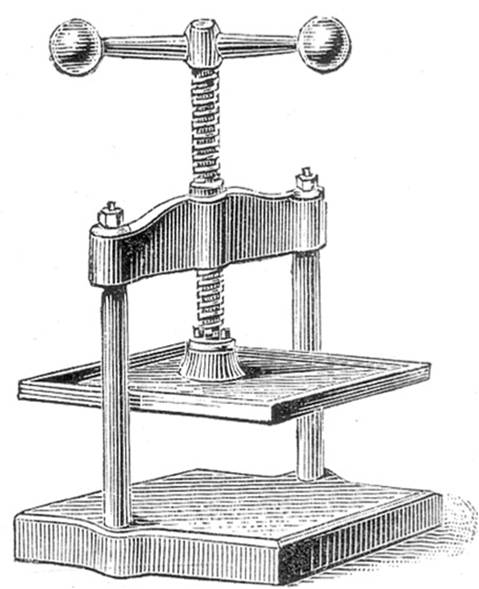
It’s a memorable image that Dickinson presents: that the delightful, fragrant oil of attar does not spontaneously waft or pour from a rose, but rather it must be wrung from the petals using the force of a screw press.

Screw Press

In other words, this beautiful, natural, organic fragrance is the gift of screws.

What prompted me to recall these lines? Firstly, Leonard James’ recent excellent blogpost “Kayleigh Wants To Do Well“:

So ‘Kayleigh wants to do well’? Show me a child who doesn’t want to do well! If one accepts that the overwhelming majority of children want to do well then the vapidity of the questioning becomes clear. Extracting a meaningful dialogue from an underachieving child begins with putting their desire to achieve to one side and focusing on whether the child wants to put in the effort required to make it happen. Like many an adult who wants be thinner but doesn’t want to lay off the cake, Kayleigh wants a string of good grades without making the sacrifices required to achieve them.

This resonates with my own experience with some students: “Oh. so you do want to do well? Then do the bloody work then!” (Sorry, I’m going through that time of year that I refer to as “Coursework Hell” at the moment, so I might be on a tiny little bit of a short fuse.)

Secondly, let’s not forget that learning, proper learning mind you, is bloody hard work (and I make no apology for quoting this line yet again, since it so neatly crystallises and encapsulates what I think is the single most important lesson of my two decades in teaching) :

Learning happens when people have to think hard.

Professor Robert Coe

Learning, real learning, is also the gift of screws.

Mine Eyes Glaze Over: the systematization of tedium

May they stumble, stage by stage
On an endless pilgrimage,
Dawn and dusk, mile after mile,
At each and every step, a stile;
At each and every step withal
May they catch their feet and fall

— Robert Graves, Traveller’s Curse After Misdirection (from the Welsh)

There is something fundamentally wrong with a system where individuals are expected to invest more time and energy in proving that they’ve done a thing than in actually doing the thing itself.

It seems to me that in the world of education (in the UK, at least) we have stepped through into that looking glass world already. And it’s getting worse.

Case in point: my school’s new salary policy. Gone is the system of automatic salary progression (subject to satisfactory performance management, of course). Instead, any teacher seeking to progress on the salary scale will need to submit — oh joy of joys! — a portfolio of evidence. And this is evidence required in addition to the evidence required for the performance management process. One system is not enough! We need two complex, mutually independent systems to check that everyone is doing the job that they are being paid to do.

In a way, it’s quite endearing: this is our leadership team admitting that if a person happened not to be doing their job properly, then it is more than likely that no-one on the management team would have noticed.

But never mind! An extra layer of inflexible, unresponsive bureaucracy will undoubtedly do the job, as it has done in numerous other instances.

I can’t help but be reminded (yet again) of Woody Allen’s Dictator who required that all citizens change their underwear every half hour. And that they wear their underwear on the outside. Why? “So we can check.”

The dreaded words weekly minuted line management meeting cannot be far behind. The idea of this is that I get to spend an hour meeting with my line manager and then another hour meeting with the people that I line-manage and then we’ll all email each other to confirm the issues, actions and timelines discussed in the meeting. And type up the minutes so that our line manager can submit them to his or her line manager. The upshot of this is that of course nobody has the time to actually take the actions agreed on  in the meeting. As the old joke has it: a meeting is a process whereby you spend hours in order to produce minutes.

And will the line manager of our line manager read the minutes submitted? I doubt it. Nobody possibly could, even assuming they wanted to.

This is the latest iteration of an ancient human idea:

[W]hen any uncertainty disrupted the smooth flow of life . . . men turned to the supernatural . . . The ordinary person found many willing to allay his concerns [including] professional magicians ready to supply incantations for any need . . . Superstition in general guided life . . . Charms were commonly used against all manner of ills.

Robert Knapp, Invisible Romans (The Romans That History Forgot) p.13

I conjure you, daemon, whoever you may be, to torture and kill, from this hour, this day, this moment, the horses of the Green and the White teams; kill and smash the charioteers Clarus, Felix, Primulus, Romanus; do not leave a breath of them.

— spell written on a lead tablet by an ancient Roman, quoted by Knapp p.13

To develop independent learning within a whole school context and challenge staff and student underperformance at a systemic as well as individual level
— Recent performance management target

Computing includes the concept of ROM — Read Only Memory; that is to say, memory that is designed so that its contents cannot be deleted or overwritten.

In my opinion, what passes for best practice in the world of education today includes the concept of WOD — Write Only Documents; that is to say documents that are designed so they are never to be read after they have been written.

Quite frankly, we are building giant pyramids and Doric-columned temples of propositions that are destined to be forever unread: mighty, cloud-piercing ziggurats of unread words.

For all the good that they do, these words might just as well be scratched on a pottery shard or a scrap of lead and thrown in a magic well as, once upon a time, the Romans used to do.

May they stumble, meeting by pointless meeting
Upon an endless paperchase,
Dawn and dusk, email after email,
Each one more urgent than the last;
Each one demanding data,
Available to the sender
Who finds it easier to press “send”
Than look it up themselves.

And may the bone that breaks within
Not be, for variation’s sake
Now rib, now thigh, now arm, now shin,
But always, without fail, THE NECK.

(With apologies to Robert Graves for the first 8 lines)

Licensed to Teach?

I miss the GTC. Actually, no, scrub that. What I really miss are the reports from the GTC hearings that used to appear in the TES (you know, when it still looked like a newspaper rather than an in-flight magazine for a budget airline).

What I found fascinating was the jaw-dropping chutzpah of some of the cases. Not only could I not conceive of doing some of the stuff reported myself, but I honestly thought that not a single colleague that I had worked with over the years could come anywhere close either. Quite frankly, much of it seemed too bizarre to be true, and yet there it was, reported in sober black and white.

[The man] who recommended a curacy as the best means of clearing up Trinitarian difficulties, that “[holy] orders” are a sort of spiritual backboard, which, by dint of obliging a man to look as if he were strait, end by making him so.
George Eliot, Carlyle’s Life of Stirling.

And now along comes Tristram Hunt with yet another cunning plan to put a spiritual backbone (or a “spiritual backboard”) into the profession with a system of licenses.

In principle, I have no objection to this. There are some individuals who should not be allowed to remain in the profession. If I put my mind to it, I could probably name one or two that I have worked with over the last twenty or so years who (in my opinion) should have been chucked out. But I would have to think about it.

So, in my personal experience at least, this is not a major problem. To be blunt, the sad truth is that natural wastage from the tough environment of modern teaching will take care of most of the wasters and no-hopers. The ones who stay — we few, we happy few! — generally really want to stay.

Let me hasten to add that not that everyone who leaves is a waster or no-hoper — some leave through a lack of support or the insanely inappropriate priorities of their school or line manager.

The devil will be, as always, in the detail. I think that what I dread is a bizarre set of professional expectations drafted by someone who thinks that, by dint of obliging a teacher to look as if he or she were strait, that it will end by making them so.

For example, one of the most excellent and engaging teachers that I know is also one of the scruffiest. It would be a pity if an ill-considered set of criteria forced eccentric individuals  such as him out of the profession because they didn’t always do up their top button (are you listening, Sir Michael?).

We can but hope, because (going on past experience, at least) the profession will only have a very limited say in drafting the licensing criteria.

“Hear me. I am your new president. From this day on, the official language of San Marcos will be Swedish. Furthermore, all citizens will be required to change their underwear every half hour. Underwear will be worn on the outside so we can check.”

— The President’s victory speech , from Bananas (dir. Woody Allen 1971)

President
I have this idea about licenses for teachers and moving from a system of letter grades to number grades…

The Myth of Pedagogy

God help me, but I really enjoy reading edu-blogs: whether they contain tips, opinions, polemical rants or genuine philosophical analysis, they are all grist to my reading mill.

However, practically all the blogs that I have read buy into what I think of as the Great Myth of Pedagogy. In fact, I think all teachers (including myself) buy into it to a greater or lesser degree. Although, on reflection, perhaps members of SLT buy into it more than most.

What is this myth? It is based on the fallacy of magical thinking:  as human beings, we all too often make causal connections or assume correlations between two events based on what is essentially superstition, rather than logic, evidence or reason.

“11Sc5 met their GCSE target grades because of the extra targeted intervention that I instigated.”

“Erm…you do know that only 3 of them ever turned up. And they were the ones that actually didn’t need to turn up.”

“Targeted, proactive intervention. It’s the way forward!”

“So — you’ll actually be doing the targeted, proactive intervention every day after school next term, then?”

“No, of course not. I can’t waste time standing in front of a whiteboard reading powerpoint slides at students! I’ll be too busy coming up with innovations like T.P.I. — targeted, proactive intervention!”

“Oh. Goody.”

As a teacher, I believe that what I do in the classroom makes a difference. I wouldn’t stay in the classroom if I didn’t believe that. However, what I am much less certain of is what exactly it is that I am doing that is actually making a difference.

Many years ago, a short story by the much underrated SF author Robert Sheckley had a profound influence on me. The story was called “Pas de Trois of the Chef and the Waiter and the Customer”. In this masterful story (which probably doesn’t sit easily in the SF genre), three narrators describe what happened in an Indonesian restaurant on a Mediterranean island some years ago.

The Chef seeks absolution for addicting the Customer to his uncommonly delicious rijstaffel dishes and precipitating the man’s decline into obesity and illness. The Waiter is racked with guilt because he used jazz music to hypnotise the Customer into overeating: he played an artfully chosen sequence of classic jazz records over the restaurant loudspeakers and observed the customer eating in time to the music. Finally, the Customer confesses that he harboured a mad passion for the young Waiter and kept eating at the restaurant because he was convinced that the Waiter was shamelessly flirting with him.

The basic shape of the story is the same according to each of the narrators; however, none of them agree on salient details such as the others’ names, nationalities or motivations. More poignantly, at the climax of the story when the Customer walks out of the restaurant for the last time, each of the characters remembers an entirely different fervidly overwrought final conversation.

Author Michel Faber (another Sheckley aficionado) writes that the message of “Pas de Trois of the Customer and the Waiter and the Customer”  is

that people inhabit different realities. By this I don’t mean that people differ in their ability to perceive the objective reality of the lives they share with others. I mean that each of us tends to live in an alternate universe, which may bear only the most incidental relationship to the universe inhabited by the next person.

There are undoubtedly some objective realities in the classroom that teacher, observer and students would agree on. But what are they? I am not sure.

The room the lesson was held in: yes. The subject matter of the lesson: probably. The absence or presence of serious misbehaviour (e.g. throwing chairs, fighting): yes. Whether the teacher was confident and knowledgeable about the lesson content: yes, probably. Whether the teacher chose the most effective activities to teach the material: no. Whether all of the students were engaged all the time: no, probably.

I hope you see my point. But where does this leave us?

My answer is: we are no worse off than before, and we are probably better off in that we have acknowledged our ignorance and we are not pretending to knowledge that we do not possess, and we are not indulging in “educational voodoo” or magical, wishful thinking.

Now I am not suggesting that this state of affairs cannot change. As more scientific research is done (perhaps along the lines of the double-blind trials or further refinements in neuroscience) we will build up more reliable knowledge of what really works in the classroom.

In the meantime, I believe that we are essentially in the “pre-scientific” age of the classroom. We are like blacksmiths before the advent of the science of metallurgy. We have a range of traditional techniques and rules of thumb that work very effectively, but we are not always sure exactly why or how they work, at least in a scientific sense. We simply know that these kinds of techniques have worked in the past. Blacksmiths knew that if they hammered a piece of iron a lot it would become harder; teachers know that “learning happens when people have to think hard” (Prof. Robert Coe‘s Simple Theory of Learning).

That’s my purpose as a teacher: to make students think really hard about stuff. By whatever means necessary.

An old proverb suggests that “It is better to light a candle than complain about the dark”. And so it is. However, the first indispensable step is to say: “Hey, is it just me or is it really dark in here?” and cautiously begin feeling your way forward.

George Eliot and the Internet

George Eliot (penname of Mary Anne Evans, 1819-1880): did she predict the rise of the Internet?

As I wandered around a small shopping mall today, I observed a large number of people interacting intently with their smartphones. Nothing ground breaking there, you might say, but it called to mind a passage I’d read in George Eliot’s Essays (which is a treasure trove of exquisite writing of which I was completely unaware until a few days ago):

In fact, the evident tendency of things to contract personal communication within the narrowest limits makes us tremble lest some further development of the electric telegraph should reduce us to a society of mutes, or to a sort of insects communicating by ingenious antenna of our own invention.

George Eliot, “Woman in France: Madame de Sable”, The Essays of George Eliot

The internet is a further development of the electric telegraph. Mobile phone technology can certainly be likened to “ingenious antenna of our own invention”. Perhaps we will grow more insect-like as we incorporate the technology more and more into our physical structure. I suspect that “Google Glass” is only the beginning of the process.

File:Google Glass Explorer Edition.jpeg
Google Glass is a wearable computer with an optical head-mounted display (OHMD) that is being developed by Google in the Project Glass research and development project. (Wikipedia).

But is this and similar technology in the process of reducing us to a society of mutes?

Yes and no. In my experience, digital communication can certainly help to spark conversation of the old-fashioned, face-to-face kind.

However, as my wife has frequently observed–acerbically, but with love, as only she can(!)–I am all too ready to crawl into my digital man-cave of an evening. I can’t help but be aware that I am also one of those people who often prefers to email or text rather than make an actual person-to-person phone call. And how does being a blog-writer fit into this pattern? Pass over those electronic antenna of our own invention, Alice.

I don’t think that I’m a particularly unsociable person, but it makes me think. Selective verbal mutism: is this the wave of the future?

T. S. Eliot predicted in The Hollow Men that

This is the way the world ends
Not with a bang but a whimper.

I don’t think he was quite as prescient as the other Eliot. Perhaps it should read:

This is the way the world ends
Not with a bang but a Tweet.

And a Merry Christmas to one and all!