Teachers At The End Of Their Tether

His renascent intelligence finds now that we are confronted with strange convincing realities so overwhelming that, were he indeed one of those logical consistent creatures we incline to claim we are, he would think day and night in a passion of concentration, dismay and mental struggle upon the ultimate disaster that confronts our species . . . It will perish amidst its evasions and fatuities. It is like a convoy lost in darkness on an unknown rocky coast, with quarrelling pirates in the chartroom and savages clambering up the sides of the ship to do evil as the whim may take them.

— H. G. Wells, Mind At The End of Its Tether (1945), pp. 12, 15

Although I first read the book a long time ago, the profoundly depressing atmosphere of H. G. Wells’ last book has haunted me over the years. In this book, he brooded on what he saw as the imminent extinction of humankind. At times, the prose seemed less than coherent; but at others, it seemed lucid and recognisably Wellsian. The title says it all — it is what it is: the ruminations and lucubrations of a Mind At The End Of Its Tether.

In my estimation, there has been something in the air of the edu-blogosphere over the last few days that recalls the dark atmosphere of Wells’ book. What I think we’re seeing is a number of teachers at the end of their tether.

For example, Teaching Personally writes:

The last half-term was fraught. Not so much with the pupils as other things,  notably the issue of marking . . . We have now been told that we must also expect children to respond to our marking with ten minutes’ worth of green pen every time books are returned – and then we must go back through their books and acknowledge or respond to their replies. This is in effect double or even triple marking . . . I doubt there is anyone who disagrees that marking is important. But this is not the way to do it. I simply cannot function at the intensity now being demanded; nobody can. [Emphasis added.]

From a different perspective, Heymissmith writes:

The ideals I held when I went into teaching twenty years ago were centred around one idea: that education was liberation . . . Charter chains such as Doug Lemov’s Uncommon Schools network exert incredible amounts of control over their teachers, curriculum and students in the pursuit of narrowly defined ‘success’ . . . It feels as if a nuclear winter is descending. [Emphasis added.]

Martin Robinson also writes:

Different children every year are expected to perform better than children did the year before. This means that although every year the children change, the school is expected to improve, the children are not the reason for this improvement, the school is. This is not teacher centred or child centred education, it is school centred, and with statistical modelling it will be school eat school out there . . .

As grades are currency in the real world it is always good to hear of children doing well, getting on a course, getting an interview, getting a job that they wouldn’t have got were it not for that ‘B’…

But…

If the child is but a cog in an exam machine we can but wonder if the child that got on the course clutching their B to their bosom is the same child that the new course teacher expects them to be. The more a school or teacher does for a pupil in order to get them through the exam there has to come a point where the exam is not really down to the pupil at all. This means that the exam currency for the pupil is destabilised. [Emphases added.]

The edu-bloggers quoted are amongst the writers to whom I routinely turn when I need my pedagogic compass reset, my enthusiasm reignited or when I need my often unthinking acceptance of dogma or fashionable nonsense challenged (which is way more often than I’d care to admit).

Perhaps it is just the winter of our discontent, but to me there seems to be a larger number (than usual!) of edu-bloggers expressing disquiet at a pervasive, creeping rottenness at the heart of UK education. And, disparate and heterogeneous group though they are, I believe that edu-bloggers have their collective finger on the pulse of education.

The canaries in the coal mine are speaking.
Safe Space

[Being a satire partly inspired by university campus “safe space” policies and this.]

The Roman Inquisition recently posted this message on their Facebook page:

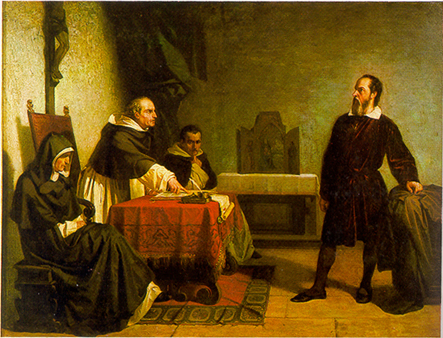
The Roman Inquisition Society stands in solidarity with the Geocentric Society. We support them in condemning the actions of the Astronomy Society in extending an invitation to Professor Galileo Galilei to speak on campus, and agree that hosting known geocentrophobes at our university creates a climate of hatred.

image
Galileo Facing The Roman Inquisition by Cristiano Banti

A spokesman for the Roman Inquisition Society told us that the publication of Galileo Galilei’s new book Dialogue On The Two Chief World Systems showed that Professor Galilei, was “nothing but a reactionary Heliocentrist of the worst stripe”.

image
Frontispiece of Dialogue On The Two Chief World Systems

The spokesman went on to say that an event where Professor Galilei would be able to speak “uninterrupted and unopposed, possibly for several whole minutes, on the supposed ‘reality’ of the Earth’s motion around the Sun” would be in direct contravention of stated Student Union policy which does not grant a platform for speech which could be interpreted as being “disruptive to social and community harmony”.

He closed by saying that: “Whilst we in the geocentrist community have always welcomed debate and challenge, it must be within the context of a positive conceptual framework, such as that put forward by that nice Professor Harry Stottle. After all, freedom of speech is all well and good, but don’t we geocentrists deserve our safe space too?”

Members of the Astronomy Society said that they had invited both the Roman Inquisition Society and the Geocentric Society to observe the moons of Jupiter through a telescope, but representatives of both societies had declined by sticking their fingers in their ears and shouting “La-la-la! Not listening! La-la-la!”

Educational Defeat Devices

image

The Volkswagen Emissions Test Defeat Device needs no introduction:

Full details of how [the defeat device] worked are sketchy, although the EPA has said that the engines had computer software that could sense test scenarios by monitoring speed, engine operation, air pressure and even the position of the steering wheel.
When the cars were operating under controlled laboratory conditions – which typically involve putting them on a stationary test rig – the device appears to have put the vehicle into a sort of safety mode in which the engine ran below normal power and performance. Once on the road, the engines switched out of this test mode.
The result? The engines emitted nitrogen oxide pollutants up to 40 times above what is allowed in the US.
BBC News 4/11/15

This perceptive post from cavmaths shows , I think, the danger of relying on widely used educational “best practice” short cuts. They can actually be deleterious to student understanding. In short, many of them are simply “educational defeat devices”, clever tricks designed to give a false impression of student performance under artificial test conditions, cheats that fall apart when tested in the real world.

PIXL: panacea or poison?

“How the understanding is best conducted to the knowledge of science, by what steps it is to be led forwards in its pursuit, how it is to be cured of its defects, and habituated to new studies, has been the inquiry of many acute and learned men, whose observations I shall not either adopt or censure”.
–Samuel Johnson, The Rambler, April 1750

A colleague described a recent visit to a highly successful science department that has drunk mighty deep of the PIXL well. I shall summarise some of her observations and comments below. My reactions varied from intrigued to puzzled to horrified, but in keeping with the Johnson quote above, I shall endeavour to urge neither adoption nor censure — at least until I have thought about it some more.

Item the first: textbooks are forbidden. Students are taught from in-house PowerPoints and worksheets which are made available online for individual study by students. My colleague reported that she visited several classes in the same year group, and all the teachers were teaching the same topic with the same PowerPoint — and were often on exactly the same slide at the same time! Reportedly, this system was set up because science leaders were not satisfied with the quality of lessons being planned by individual teachers. For myself, I couldn’t help but be reminded of the Gaullist education minister who claimed to know which page of which textbook children throughout France would be studying on that very day . . .

Item the second: science leaders have exhaustively analysed the GCSE exam board specification to produce the materials mentioned above. Every learning point is translated into “student friendly” language and covered in detail. My information is that a typical starter activity might be for students to copy down a summary of important information from a PowerPoint, before practising application using worksheets and past paper questions. These are often peer marked. Since planning and resource making have been centralised, the workload of the classroom teacher appeared to be more manageable than in many schools.

Item the third: students are regularly tested. Test papers are gone over with a fine tooth comb by the science team and areas of weakness identified. These are addressed in large, multiclass study skills sessions led by the head of science in the assembly hall, teaching from the front (brave woman!) using an old fashioned OHP and transparencies! (Sigh! Now that takes me back: I can almost smell the banda machine solvent as we speak.) Students are sat at exam desks for the session, and the hall is supervised by teaching staff and SLT (including the headteacher on the day my colleague visited). This is followed by a “walk and talk” mock (i.e. the answer is modelled by the Head of Science on her trusty OHP), followed by individual exam practice under exam conditions.

And so we come to the question: shall we adopt or censure these observations?

The truth is: I am not sure.

On the one hand, I can see how this might be a rapid and effective way to improve results, especially in a school with an inexperienced science team. And the part of me that actually likes writing schemes of work and resources would relish the challenge of developing such a scheme. And I’m told that percentage science pass rates improved significantly from the low teens to the high eighties . . . over the course of a single year! And you can’t really argue with such success, can you? (Actually, yes you can — see this post on the Halo Effect) Also as Lt. Worf of the starship Enterprise once observed: “If winning isn’t important, why keep score?”

And yet . .

Part of me rebels at such regimentation. Is this an example of the “mcdonaldisation” of education, the continuing process of deskilling the classroom practitioner? I genuinely hate to say this, but given this model maybe Sir Ken Robinson has a point; although this particular iteration seems to owe more to Taylorism rather that the nineteenth century workhouse.

Use another teacher’s PowerPoint? Ugh! I’d rather be forced to use his toothbrush . . .

And, while I grant that many examination questions are indeed fit for purpose and thoughtfully designed to expose misunderstandings and misconceptions, I cannot help the feeling that our examination system has become an overly-powerful tail wagging an emaciated dog.

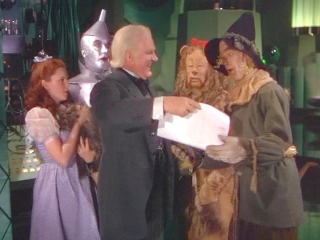
Is learning truly synonymous with exam success? Have we become so enamoured of the assessment of learning rather than learning itself that we, like the Scarecrow in The Wizard of Oz, would not consider ourselves truly learnèd unless we hold a diploma saying that we are?

image
Why, anybody can have a brain. That's a very mediocre commodity . . . great thinkers . . . think deep thoughts and with no more brains than you have. But they have one thing you haven't got: a diploma.

I shall leave the final word to my friend Sam Johnson:

“The great differences that disturb the peace of mankind are not about ends, but means. We have all the same general desires, but how those desires shall be accomplished will for ever be disputed.”
The Idler, December 1758

The Helicopter Effect

Helicopter Parent
Image from https://commons.wikimedia.org/wiki/File:Helicopter_WikiWorld.png

Would you call 999 if you saw a mouse in your college accommodation? Two US students did; and not only that, but they requested counseling for post traumatic stress disorder.

Peter Gray argues that similar events are becoming more common. He writes:

[Because of ‘helicopter parenting’ we] have raised a generation of young people who have not been given the opportunity to learn how to solve their own problems. They have not been given the opportunity to get into trouble and find their own way out, to experience failure and realize they can survive it, to be called bad names by others and learn how to respond without adult intervention.

As teachers, I’m sure we all have tales of the ‘helicopter parents from hell’, but there seems to be something more going on than a few unrealistically demanding parents: there has been a veritable seismic shift in societal attitudes that has occurred over the course of a lifetime. Parents and families seem to be exerting more control over children’s lives. The default setting seems to have moved from the caring, loving but essentially “light touch” supervision of my childhood to what amounts to a species of neurotic control freakery.

My own free range childhood was similar to that described by Jerry Coyne in a thoughtful blog post commenting on Gray’s piece.

When I was a kid of 10 or so, I was allowed to walk to school on my own and, after school, ride my bike over to my friends’ houses, where we’d then take off in juvenile packs to explore our surroundings. There was no adult supervision save the order that we be home by dinner. That not only doesn’t happen any more, but parents who permit such roaming can (and have been) arrested.

And are schools and teachers contributing to this change?

I would say yes, some of the time.

One example is the question “Have you called home?” This is a very common one in my school and is frequently an entirely legitimate response to many issues. (It’s completely my own fault that it makes me smile because it reminds me of the Lewis Carroll line “And hast thou slain the jabberwock?”)

However, I do question its over-use with older students, particularly A-level students. In a perfect world, the conversation should be between the student and the teacher, not via the parent.

But shouldn’t we keep the parents informed, you ask? Well, yes, obviously. But not over-informed about each little tic and twitch.

And surely “I’ll tell on you to your Mum!” is a consequence that has the effect of tying the apron strings more tightly, rather than loosening them?

Let me emphasise that that I am not opposed to calling home per se, just that I think that we over use this consequence with older students.

Broadly speaking, I suppose that I am in favour of increasing the freedom of young people. Including, in the end, the freedom to fail.

You see, I believe in freedom, Mr Lipwig. Not many people do, although they will of course protest otherwise. And no practical definition of freedom would be complete without the freedom to take the consequences. Indeed, it is the freedom upon which all the others are based.
— Lord Vetinari from Terry Pratchett’s Going Postal

In Defence Of ‘Inadequate Philosophy’

[B]ecause all my moral and intellectual being is penetrated by an invincible conviction that whatever falls under the dominion of our senses must be in nature and, however exceptional, cannot differ in its essence from all the other effects of the visible and tangible world of which we are a self-conscious part.
— Joseph Conrad, Author’s Note to The Shadow-Line

Anthony Radice writes a provocative blog as The Traditional Teacher: whilst I often agree with much of what he says, sadly our foundational philosophies could not be further apart.

[P]revalent theories are having a disastrous impact on the world of education. Influenced by these theories, there are many nowadays who think that materialism can be justified by statements such as ‘Evidence suggests that ‘conscience’ and ‘consciousness’ and other mental processes are products of human brain activity’.
[22/6/15]

I wrote the quoted words in the comments of the Traditional Teacher’s previous blog post [21/6/15], and I stand by them still. I would describe myself as a methodological naturalist rather than as a materialist. The label “materialist” calls to mind the seventeenth century view that there is only “atoms and the void”. This is indeed a mechanistic philosophy perhaps best described as ontological naturalism: in other words, all that exists is atoms and the void. If we know the initial states of all the particles then it would seem that we then can predict the future state of the universe at any time. This does indeed suggest that the past, present and future are pre-determined.

However, it soon became clear that such a view could not be justified. Perhaps a two-body Newtonian system can be deterministic in the sense that its past, present and future can be calculated provided enough information about its state at one instant is known. However, the lack of an exact solution to the famous Three Body Problem shows that even mechanistic ontological naturalism does not automatically entail determinism.

Since methodological naturalism does not involve a commitment to an ontology but rather to a methodology (perhaps best exemplified by the empirical sciences, but not limited to them), it does not entail a commitment to any form of determinism either.

I believe the foregoing shows that both “flavours” of naturalism do not automatically lead to determinism. Mr Radice, however, is not impressed:

Indeed, we have reached the stage where many do not hold others responsible for their actions, at least in theory. Their materialistic determinism leads them to ‘explain’ actions in psychological or social or (insert favourite flavour of determinism) terms. But this doesn’t explain anything, because it leaves out the person. It removes humanity because it removes conscience and freedom. All humanity is excused because humanity, it turns out, does not exist.

Sadly, I do not follow his reasoning. If materialism does not entail determinism (as I think I have shown above), then it does not rule out conscience or freedom or humanity. In fact, methodological naturalism leads me to conclude that there is substantial evidential warrant for supposing that they do exist. And this in spite of the fact, as Mr Radice points out, that they “are not material objects subject to laboratory experimentation”. True, but irrelevant — so are many of the entities and concepts dealt with by modern science: virtual photons for example. I believe philosopher Robert T. Pennock puts it well:

Many people continue to think of the scientific world view as being exclusively materialist and deterministic, but if science discovers forces and fields and indeterministic causal processes, then these too are to be accepted as part of the naturalistic worldview . . . An important feature of science is that its conclusions are defeasible on the basis of new evidence, so whatever tentative substantive claims the methodological naturalist makes are always open to revision or abandonment on the basis of new, countervailing evidence.
Tower of Babel, pp.90-91

Mr Radice seems to believe that since an individual neuron cannot be conscious, this means that a collection of neurons (a brain, for example) cannot be conscious simply because of the action of neurons:

But this sort of statement doesn’t explain what something is, only how it is manifested in the material realm. It mistakes symptoms for the cause. Understanding is always about finding the cause. What causes the brain activity? A human person with freedom and a conscience.
[22/6/15]

In his philosophy, neural activity is a product of consciousness rather than vice versa. This is a classic case of the Fallacy of Composition: since A is part of B, and A has property X, therefore B has property X. For example, since a single water molecule is not wet, this means that a collection of water molecules cannot be wet, therefore water is not wet. We only experience the property of wetness when water molecules combine on a large scale. Wetness is an emergent property.

Likewise, consciousness is also an emergent property. As Bo Bennett puts it:

[I]t is difficult to imagine a collection of molecules resulting in something like consciousness, because we are focusing on the properties of the parts (molecules) and not the whole system, which incorporates emergence, motion, the use of energy, temperature (vibration), order, and other relational properties.
Logically Fallacious, p.112

Essentially, Mr Radice argues that consciousness is a form of magic with no connection with the empirical universe. Such a viewpoint cannot explain why chemicals such as alcohol and other drugs affect human consciousness, or why brain injuries are demonstrated to cause permanent changes in people’s character.

And one final point:

The Nazis may have been defeated, but their idea that human beings are no more than ‘blood and dirt’ is alive and well, and very fashionable indeed. 
[21/6/15]

Nazi philosophy is not famous for its internal coherence, but the idea that empirical materialism was a major part of their worldview is not borne out by the evidence.

The party as such represents the point of view of a positive Christianity without binding itself to any one particular confession. It fights against the Jewish materialist spirit within and without . . . The leaders of the party undertake to promote the execution of the foregoing points at all costs, if necessary at the sacrifice of their own lives.
The Nazi Party Programme 1920, Article 24

More Physics Clangers

image

Teachingscienceinallweathers highlights some disappointing Physics errors on the DfE’s National Curriculum documents for Science which have remained uncorrected for over a year (see here, here and here).

This would be bad form on, say, a school website. For an organisation that is in charge of a national education system whose elected leaders do not hesitate to label schools as “coasting” and “lacking rigour”, it is unbelievably shabby and smacks of arrogant, lazy hypocrisy. And these documents are no longer drafts: the DfE website says that “these programmes of study are issued by law; you must follow them unless there’s a good reason not to. All local-authority-maintained schools in England must teach . . . key stage 4 from September 2016.”

Some of the persistent errors highlighted by Teachingscienceinallweathers (and others, including @DrDav, @HRogerson and @miss_m_w) are:

1. The formula for kinetic energy is given as “0.5 x mass x (acceleration)^2” instead of “0.5 x mass x (velocity)^2” [p.37]

2. The formula for weight is given as “gravity force = mass x gravity constant” instead of using the correct scientific terminology of “weight = mass x gravitational field strength”. As Teachingscienceinallweathers points out, the magnitude of gravitational field strength is anything but a “gravity constant”, even near to the Earth’s surface. Similarly, stating that “potential energy = mass x height x gravity constant (g)” [p.37] invites confusion between the constant “big G” the Universal Gravitational Constant (which is genuinely a constant) and “little g” which, as noted above, is not.

3. “Charge flow = current x time” [p.37]: the phrase “charge flow” is confusing in this context. Very often, the phrase “flow of charge” is used as a synonym for “current”. I would argue that “Charge transferred = current x time” would be preferable in this case.

4. “Interpret enclosed areas in distance-time and velocity-time graphs” [p.32]: the area enclosed by a velocity-time graph represents the change in displacement; the area enclosed by a distance-time graph represents . . . erm, nothing with any physical significance, as far as I know.

I would argue that the writers of science examination questions and science specifications have tended towards the prolix over the last two decades, and I, for one, would welcome the return to the more concise but rigorous style of writing of yesteryear when an exam question could begin “A monochromatic ray of light is incident on a plane mirror at an angle of 30 degrees to the normal…” and students were expected to draw an appropriate diagram because the language was clear, formal and unambiguous.

That may indeed have been the intention of the National Curriculum writers, but they are some way from achieving it. In fact, this document is nowhere close.

My own personal bête noire is:

explain with examples that motion in a circular orbit involves constant speed but changing velocity (qualitative only) [p.31]

There is no indication that the writers intend to restrict the meaning of orbit to the celestial sense, and so it seems that it refers to motion on a circular path in general. And therein lies the problem: it might be true in cases where the radius and angular velocity are constant, but the writers do not specify this. Are they considering the motion of an object whirled on a string? Motion in a vertical circle? Motion in a horizontal circle? They don’t say. It is a fair generalisation to say that it is hard to set up motion in a vertical circle that features uniform speed without variable torque to compensate for the transfer of k.e. to g.p.e. and vice versa.

“Explanations of circular motion restricted to examples involving constant speed to introduce the concept of centripetal acceleration as a result of changing direction of velocity” is far from perfect but is, I think, more useful than the original.

In short, those who call for rigour should display rigour.

Engelmann and Direct Instruction (Part 1)

We are art’s mercenaries,
firing our thought’s arrows
at the mystery of things
— R. S. Thomas, Paving

Engelmann comes highly recommended:

In his book Visible Learning: A Synthesis of Over 800 Meta-Analyses Relating to Achievement, the researcher John Hattie evaluates the success of a range of different teaching approaches. As the subtitle suggests, he synthesised the results of hundreds of different analyses of achievement and measured the effect of different factors . . . A specific Direct Instruction programme was developed by the American educator, Siegfried Engelmann, in the 1960s. It proved incredibly successful but also incredibly controversial because it contradicted so much of what theorists like Dewey and Freire advocated. Hattie specifically endorsed Engelmann’s programme.

— Daisy Christodoulo, Seven Myths About Education, location 751 Kindle edition

Later on in the book, Hattie confronts the dominance of empirically unsuccessful constructivist ideas in teacher training. He explains the effectiveness of Direct Instruction, a structured and unapologetically teacher-led method of instruction originated in 1960s America. Despite being shunned by the American education establishment, Hattie’s analysis shows that Direct Instruction has one of the largest effect sizes (0.59) for any teaching programme.

— Robert Peal, Progressively Worse, location 2689 Kindle edition

I was intrigued and wanted to find out more, so I recently read Siegfried Engelmann’s and Douglas Carnine’s book Could John Stuart Mill Have Saved Our Schools? which can be thought of as an introduction to the philosophical underpinning of Direct Instruction.

I claim no particular expertise in this field beyond that of a working teacher with a couple of decades of experience. I suppose that it is also appropriate at this point to disclose that my practice generally tends towards the traditional-didactic rather than the progressive end of the spectrum, so I am perhaps predisposed to be sympathetic to Engelmann’s ideas. Nevertheless, this blog will attempt to engage critically with his ideas and arguments.

Engelmann and Carnine open by saying that (unfortunately, in their opinion) education has historically been excluded from the domain of science. They suggest that the five principles of induction put forward by philosopher John Stuart Mill in his A System Of Logic (1843) would form a suitable basis for a scientific systematisation of effective educational practice. The efficacy of these principles when applied to education was not recognised at the time, not even by Mill himself, until Engelmann and Carnine rediscovered them in the 1970s.

I was unfamiliar with this aspect of Mill’s work, and it was a delight to be introduced to it. I was particularly struck by this bombshell from Mill:

In another of its senses, to reason is simply to infer any assertion, from assertions already admitted: and in this sense induction is as much entitled to be called reasoning as the demonstrations of geometry
— J. S. Mill, A System of Logic, location 175 Kindle edition

Philosophers have long debated the “problem of induction”. It is generally recognised that deductive reasoning (e.g. Socrates is a man; all men are mortal; therefore Socrates is mortal) is more dependable that inductive reasoning (e.g. every swan I have seen to date has been white; therefore every swan I will see in the future will be white).

However, it is a under-acknowledged truth that in our day-to-day lives (and in science generally) we rely primarily on induction and inference and, for the most part, they serve us well. What Mill is attempting to do is address the philosophical “second class status” accorded to inductive truths by formalising a set of rules that allow us to generate valid inductive inferences.

Engelmann and Carnine argue that these rules are of fundamental importance to the teacher as they allow her to construct a system of instruction that allows students to generate valid inferences and minimise false inferences:

In summary, the fabric of well designed instruction consists of details that promote specific inferences and rule out inappropriate inferences. Effective instruction is not born of grand ideas or scenarios that appeal to development or love of learning. It is constructed from the logic and tactics of science.
— S. Engelmann and D. Carnine, Could John Stuart Mill Have Saved Our Schools? location 1944 Kindle edition

One example they present is that of a constructivist approach to the teaching of prime numbers by getting students to lay out numbers of beans in rows and columns: students are invited to notice that some numbers (e.g. 7) cannot be laid out in rows of more than one bean which have equal numbers of beans. Englemann and Carnine argue that this activity does not accord with Mill’s principles because it will encourage students to generate a number of false inferences:

The false inference is that prime numbers are odd numbers. Imagine the consternation of the student who later discovers that 9 and 15 are odd, but they generate multiple rows. In contrast, 2 is even, but it is prime. A related false inference is that there is some form of predictable pattern for the occurrence of prime numbers, rather than the fact that some numbers are primes and others aren’t. Unless students had received previous instruction on what primes are, the bean counting has a potential of inducing false inferences; however, if students first learn the properties of prime numbers, the bean counting is a pointless activity. It simply provides validation that prime numbers are different from numbers that are multiples.
— location 1779 Kindle edition

I discussed this criticism with a Maths colleague who disagreed that the constructivist approach would necessarily generate false inferences — but more on that in a later post.

In summary, I am fascinated by the potential of Englemann’s and Carnine’s approach and intend to post more as I mull over its details and implications. Lord help me, but I could not help but be stirred by what could be interpreted as a call to arms:

[Our system] could certainly be improved by a concerted effort to do so. What it needs is a comprehensive critique by serious logicians and philosophers. It needs attention to its details so they can be refined or replaced to be more in accord with logic or empirical evidence.
— location 2591 Kindle edition

And perhaps more importantly, by working teachers too.

(Part Two here)

So You Say You Want A Revolution?

You know the power of words. We pass through periods dominated by this or that word — it may be development, or it may be competition, or education, or purity or efficiency or even sanctity. It is the word of the time.

— Joseph Conrad, Chance

A change is stealing over the educational world. I feel it in my water. The time of rigour, standards and excellence is past. The time of creativity, personalised curricula and and exam-factory approaches.

In other words, Sir Ken Robinson’s star is in the ascendant. Or so it would seem, at least from Shadow Education Secretary Tristram Hunt’s review of Sir Ken’s book.

He quotes Sir Ken:

Our school systems are now a matrix of organisational rituals and intellectual habits that do not adequately reflect the great variety of talents of the students who attend them. Because they conflict with these systems, too many students think that they are the problem; that they are not intelligent, or must have difficulties in learning.

H’mm. Based on this extract, this is vintage Sir Ken — and also a textbook case of the informal logical fallacy known as prejudicial language: emotive terms are used to link value and moral goodness to an acceptance of the proposition. It might even be true in certain instances — but as general description of our current schools system . . . in my experience, nah.

Rather worryingly (for me), Tristram Hunt finds this thesis “compelling”. We are, apparently,

currently operating a Fordist model of mass education that is failing to prepare young people for the dramatic socioeconomic demands of the digital age.

‘Fordist’, no less. Sounds bad, doesn’t it? Mass production bad, bespoke craftsmanship good followed by the reassuringly familiar Shift Happens! trope.

To me, this is not redolent of a rabble of rowdy revolutionaries so much as a middle class stitch up. It’s as if the Bolsheviks stormed the Winter Palace in order to get hold of the fish knives and forks. Or, possibly, they stormed IKEA instead. And when I say ‘stormed’ I mean ‘strolled purposefully towards the organic juicer section’.

I suspect that Sir Ken is a Roussean Romantic at heart: his ideal world would be a misty moorland populated by heroic Heathcliff-clones stomping, shouting and being Creative with a capital ‘C’; a world where no-one has to empty the bins, or build or maintain the ‘Fordist’ industrial infrastructure upon which so much romantic posturing depends.

“Squaring The Circle” Or Lukewarm Water? The Disappointed Idealist vs. Horatio Speaks Affair

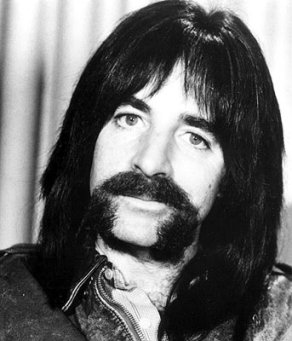
[They] are like poets, you know, like Shelley or Byron, or people like that. The two totally distinct types of visionaries, it’s like fire and ice, and I feel my role in the band is to be kind of the middle of that, kind of like lukewarm water.

— “Derek Albion Smalls” from This Is Spinal Tap

image
"Derek Albion Smalls" as played by Harry Shearer

Chemistrypoet invites someone to “square the circle” between two powerfully written — but diametrically opposed — posts from Disappointed Idealist and Horatio Speaks.

Disappointed Idealist writes that he loathes what he sees as the current government’s obsession with drawing a line in the sand and declaring those on one side winners and the other as losers. He writes movingly of the experiences of his three daughters:

They just called my daughters “mediocre failures” . . . Like most clever people who don’t have difficulty with language or maths or spatial awareness, or other academic activities, I fundamentally find it impossible to truly understand why they can’t, despite endless practice, remember how to spell basic words, or how to do basic sums. The school have tried all sorts of different methods of teaching it, and so have we at home, but one day it’s there, and the next it’s gone. Some things stick for a while, some things don’t stick at all . . . At home, they are delightful, loving, awkward, stroppy, generous, always hungry, funny and, above all, happy. But they won’t “pass” their Y6 SATs.

I am sure most teachers are familiar with that “one day it’s there, the next it’s not” sensation when teaching SEN students (I wrote a post about it a while back). In my experience, patience and kindness and persistence are the order of the day in this scenario (not that anybody says it’s not.) My experience also tells me that sometimes this works, and sometimes it doesn’t.

Horatio Speaks makes the case that recent scientific research shows that all children can be taught to read, write and do mathematics effectively, bar a very few severely disabled individuals.

To which I say: good! Like most teachers, show me a better way to teach and I am all over it. Horatio Speaks goes on to say:

I applaud the passion of the Disappointed Idealist . . . But I would be happier if he – and the thousands who cheered him on – were directing their anger at the education establishment’s assumption that we will always have children who fail. It’s a false assumption, as is the emotional caricature that those advocating for more accountability for children’s progress care less about the children. I have worked with SEN long enough to know that the most deadly poison is sympathy. It kills by paralysis.

Over the years and from time to time, sadly, I have seen some bad SEN: “death by word search”, for example. And Horatio Speaks is right, bad SEN can kill by paralysis; or, more probably, boredom. But, obviously, not all SEN is bad SEN.

The nub of the disagreement between Horatio Speaks and Disappointed Idealist, I believe, lies in the use of the phrase “children who fail”.

Horatio Speaks rails against an educational establishment that assumes that we will “always have children who fail”. In my view, he is referring to the fact that some children leave school without basic literacy and maths skills.

Disappointed Idealist rails against a system that wants to label children as “mediocre failures”. In my view, he is lamenting the fact that, according to a politically imposed and essentially arbitrary standard, some children will be labeled as “failures” through no fault of their own and that this is, frankly, unhelpful.

My own view is that both of them have valid points. While it is undeniable that some children will do less well than others, by whatever measure is taken, the question is: what should the education system do with this information?

I suspect that both Disappointed Idealist and Horatio Speaks would argue for a diagnostic rather than a judgemental approach as far as each individual student is concerned.

Circle squared? Maybe, maybe not. This is Derek Albion Smalls, signing off.