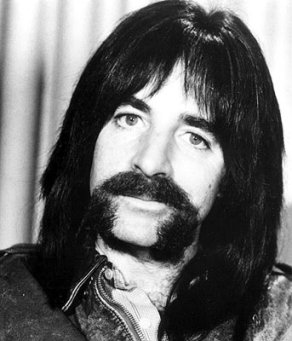
[They] are like poets, you know, like Shelley or Byron, or people like that. The two totally distinct types of visionaries, it’s like fire and ice, and I feel my role in the band is to be kind of the middle of that, kind of like lukewarm water.
— “Derek Albion Smalls” from This Is Spinal Tap
Chemistrypoet invites someone to “square the circle” between two powerfully written — but diametrically opposed — posts from Disappointed Idealist and Horatio Speaks.
Disappointed Idealist writes that he loathes what he sees as the current government’s obsession with drawing a line in the sand and declaring those on one side winners and the other as losers. He writes movingly of the experiences of his three daughters:
They just called my daughters “mediocre failures” . . . Like most clever people who don’t have difficulty with language or maths or spatial awareness, or other academic activities, I fundamentally find it impossible to truly understand why they can’t, despite endless practice, remember how to spell basic words, or how to do basic sums. The school have tried all sorts of different methods of teaching it, and so have we at home, but one day it’s there, and the next it’s gone. Some things stick for a while, some things don’t stick at all . . . At home, they are delightful, loving, awkward, stroppy, generous, always hungry, funny and, above all, happy. But they won’t “pass” their Y6 SATs.
I am sure most teachers are familiar with that “one day it’s there, the next it’s not” sensation when teaching SEN students (I wrote a post about it a while back). In my experience, patience and kindness and persistence are the order of the day in this scenario (not that anybody says it’s not.) My experience also tells me that sometimes this works, and sometimes it doesn’t.
Horatio Speaks makes the case that recent scientific research shows that all children can be taught to read, write and do mathematics effectively, bar a very few severely disabled individuals.
To which I say: good! Like most teachers, show me a better way to teach and I am all over it. Horatio Speaks goes on to say:
I applaud the passion of the Disappointed Idealist . . . But I would be happier if he – and the thousands who cheered him on – were directing their anger at the education establishment’s assumption that we will always have children who fail. It’s a false assumption, as is the emotional caricature that those advocating for more accountability for children’s progress care less about the children. I have worked with SEN long enough to know that the most deadly poison is sympathy. It kills by paralysis.
Over the years and from time to time, sadly, I have seen some bad SEN: “death by word search”, for example. And Horatio Speaks is right, bad SEN can kill by paralysis; or, more probably, boredom. But, obviously, not all SEN is bad SEN.
The nub of the disagreement between Horatio Speaks and Disappointed Idealist, I believe, lies in the use of the phrase “children who fail”.
Horatio Speaks rails against an educational establishment that assumes that we will “always have children who fail”. In my view, he is referring to the fact that some children leave school without basic literacy and maths skills.
Disappointed Idealist rails against a system that wants to label children as “mediocre failures”. In my view, he is lamenting the fact that, according to a politically imposed and essentially arbitrary standard, some children will be labeled as “failures” through no fault of their own and that this is, frankly, unhelpful.
My own view is that both of them have valid points. While it is undeniable that some children will do less well than others, by whatever measure is taken, the question is: what should the education system do with this information?
I suspect that both Disappointed Idealist and Horatio Speaks would argue for a diagnostic rather than a judgemental approach as far as each individual student is concerned.
Circle squared? Maybe, maybe not. This is Derek Albion Smalls, signing off.






 e=mc2andallthat