The Metaphor of Progress

Whatever anybody says, time is most definitely not money.

Time is space.

Let me explain: the language we use to describe and reason about time uses space and (more exactly) movement as a metaphor.

We may picture ourselves journeying through time, where we are physically moving toward the future; perhaps like a passenger on board a train: “We’ll soon reach the end of the month”, or “It’ll be a long time before I reach retirement age.”

train 1

Alternatively, we may picture ourselves as standing still and time moving past us; perhaps like a person standing on a platform watching a train go by: “Christmas will soon be here”, or “The examination season will soon be upon us.”

Original image from http://pippagoldenberg.wordpress.com/2011/05/23/special-relativity/

Why do we make these analogies? It is not just to co-opt words but to co-opt their inferential machinery. Some deductions that apply to motion and space also apply nicely to possession, circumstances and time. That allows the deductive machinery for space to be borrowed for reasoning about other subjects. […] The mind couches abstract concepts in concrete terms.

— Steven Pinker, How The Mind Works, p.353 [emphasis mine]

I don’t want to suggest that time is only a metaphor, but rather that our ordinary, everyday ways of thinking about time are, in the main, part of the time-is-space bundle of metaphors.

And this, of course, is fine. We live our lives relying almost exclusively on inference, induction and guesswork (rather than logical analysis, deduction and rational consideration) and — usually — it’s great! These short-cuts and rules of thumb often lead us to the correct answers more quickly than other pathways. But not always.

Sometimes our machinery of inference gets things wrong. For example, who could have predicted the strange composite entity known as spacetime that is used in relativistic physics and the many counter-intuitive (but experimentally verified) predictions that stem from it?

So, if time is space, what is progress?

Pinker (pp.357-8) summarises the work of Lakoff and Johnson which suggests (amongst other things) that “virtue is up“:

He is high-minded.
She is an upstanding citizen.
That was a low trick.

It seems to me that, currently, in the world of education in general, progress buys into both the progress-is-up and progress-is-forward bundle of metaphors.

These test scores are disappointing: we need to move this class forward to show progress.
She has made excellent progress and is working at a higher level.

And my point? That although the word progress sounds real and concrete, it’s actually not. It is just a metaphor.

When we say that students are “making progress” what are we actually saying? Are they gaining higher test scores? Are they copying stuff neatly off the board? Are they writing coherent, original paragraphs in their exercise books? Are they working on a higher textbook page number than last week? Are they able to solve more difficult problems? Do they collaborate with each other to solve problems? Are they more often in brain-state X rather than brain-state Y?

I am not sure. If I say (and I have said it before and will probably continue to say it again, both verbally and in writing): “Student A has made progress. She is working at a higher level than she was last term.” —  is there actually any useful information in that first sentence other than the implication than I like what Student A has done?

Again let me reiterate that I, myself, am not sure about this. But since the idea of progress is central to much of appraisal and performance management in education, I would like to feel we are not building on sand. Is there a way of nailing this idea of progress, other than “I knows it when I sees it”? (For some reason, I hear this said in a Yorkshire accent.)

When inspectors ask to see evidence of students making progress in a lesson, are they actually only asking to see “some stuff that I like”?

Let me emphasise that I am not averse to metaphor, especially professionally useful metaphors, but I am not sure if progress is one of those.

My propositions serve as elucidations in the following way: anyone who understands me eventually recognizes them as nonsensical, when he has used them — as steps — to climb up beyond them. (He must, so to speak, throw away the ladder after he has climbed up it.) He  must transcend these propositions, and then he will see the world aright.

— Ludwig Wittgenstein, Tractatus Logico-Philosophicus, 6.54

Is it time to throw away the simple ladder idea of progress? Just asking…

The only way is up, baby
For you and me, baby
The only way is up
For you and me

— Yazz and the Plastic Population

The Gift of Screws

Essential oils are wrung:
The attar from the rose
Is not expressed by suns alone,
It is the gift of screws.

— Emily Dickinson, Time and Eternity XXV

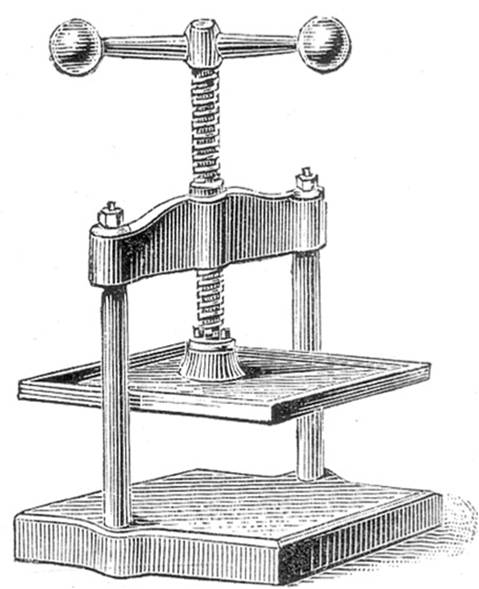
It’s a memorable image that Dickinson presents: that the delightful, fragrant oil of attar does not spontaneously waft or pour from a rose, but rather it must be wrung from the petals using the force of a screw press.

Screw Press

In other words, this beautiful, natural, organic fragrance is the gift of screws.

What prompted me to recall these lines? Firstly, Leonard James’ recent excellent blogpost “Kayleigh Wants To Do Well“:

So ‘Kayleigh wants to do well’? Show me a child who doesn’t want to do well! If one accepts that the overwhelming majority of children want to do well then the vapidity of the questioning becomes clear. Extracting a meaningful dialogue from an underachieving child begins with putting their desire to achieve to one side and focusing on whether the child wants to put in the effort required to make it happen. Like many an adult who wants be thinner but doesn’t want to lay off the cake, Kayleigh wants a string of good grades without making the sacrifices required to achieve them.

This resonates with my own experience with some students: “Oh. so you do want to do well? Then do the bloody work then!” (Sorry, I’m going through that time of year that I refer to as “Coursework Hell” at the moment, so I might be on a tiny little bit of a short fuse.)

Secondly, let’s not forget that learning, proper learning mind you, is bloody hard work (and I make no apology for quoting this line yet again, since it so neatly crystallises and encapsulates what I think is the single most important lesson of my two decades in teaching) :

Learning happens when people have to think hard.

Professor Robert Coe

Learning, real learning, is also the gift of screws.

The Physicist’s Eulogy

“You want a physicist to speak at your funeral. You want the physicist to talk to your grieving family about the Principle of Conservation of Energy, so that they will understand that your energy has not died. You want the physicist to remind your sobbing mother about the First Law of Thermodynamics: that no energy gets created in the universe, and none is destroyed. You want your mother to know that all your energy, every vibration, every joule of heat, every wave of every particle that was her beloved child remains with her in this universe. You want the physicist to tell your weeping father that amid the energies of the cosmos, you gave as good as you got.

“And at one point you’d hope that the physicist would step down from the pulpit and walk to your broken-hearted spouse there in the pew and tell him that all the photons that ever bounced off your face, all the particles whose paths were interrupted by your smile, by the touch of your hair — those hundreds of trillions of particles — have raced off like children, their ways forever changed by you. And as your spouse rocks in the arms of a loving family, may the physicist let him know that the photons that bounced from you and that were gathered in the particle detectors that are his eyes, that those photons have created within his brain constellations of electromagnetically charged neurons whose energy will go on forever.

“And the physicist will remind the congregation of how much of all our energy is given off as heat. There may be a few fanning themselves with their programs as she says it. And she will tell them that the warmth that flowed through you in life is still here, still part of all that we are, even as we who mourn continue the heat of our own lives.

“And you’ll want the physicist to explain to those who loved you that they need not have faith; indeed, they should not have faith. Let them know that they can measure, that scientists have measured precisely the conservation of energy and found it accurate, verifiable and consistent across space and time. You can hope that your family will examine the evidence and satisfy themselves that the science is sound and that they will be comforted to know that your energy is still around.

“Because, according to both the First and Second Laws of Thermodynamics, not one bit of you is gone: you’re just less orderly.”

Original author unknown. Quoted by ‘WelshmanEC2’ in The Guardian http://www.theguardian.com/commentisfree/2014/feb/14/below-the-line-people-angry-science-astronomy-enthusiast [accessed 14/2/14].  NB: some minor stylistic amendments made in the version presented here.

Update: the original author is Aaron Freeman who performed it on NPR Radio in 2005. Original transcript here. Audio of performance (with added slideshow) here.

Mine Eyes Glaze Over: the systematization of tedium

May they stumble, stage by stage
On an endless pilgrimage,
Dawn and dusk, mile after mile,
At each and every step, a stile;
At each and every step withal
May they catch their feet and fall

— Robert Graves, Traveller’s Curse After Misdirection (from the Welsh)

There is something fundamentally wrong with a system where individuals are expected to invest more time and energy in proving that they’ve done a thing than in actually doing the thing itself.

It seems to me that in the world of education (in the UK, at least) we have stepped through into that looking glass world already. And it’s getting worse.

Case in point: my school’s new salary policy. Gone is the system of automatic salary progression (subject to satisfactory performance management, of course). Instead, any teacher seeking to progress on the salary scale will need to submit — oh joy of joys! — a portfolio of evidence. And this is evidence required in addition to the evidence required for the performance management process. One system is not enough! We need two complex, mutually independent systems to check that everyone is doing the job that they are being paid to do.

In a way, it’s quite endearing: this is our leadership team admitting that if a person happened not to be doing their job properly, then it is more than likely that no-one on the management team would have noticed.

But never mind! An extra layer of inflexible, unresponsive bureaucracy will undoubtedly do the job, as it has done in numerous other instances.

I can’t help but be reminded (yet again) of Woody Allen’s Dictator who required that all citizens change their underwear every half hour. And that they wear their underwear on the outside. Why? “So we can check.”

The dreaded words weekly minuted line management meeting cannot be far behind. The idea of this is that I get to spend an hour meeting with my line manager and then another hour meeting with the people that I line-manage and then we’ll all email each other to confirm the issues, actions and timelines discussed in the meeting. And type up the minutes so that our line manager can submit them to his or her line manager. The upshot of this is that of course nobody has the time to actually take the actions agreed on  in the meeting. As the old joke has it: a meeting is a process whereby you spend hours in order to produce minutes.

And will the line manager of our line manager read the minutes submitted? I doubt it. Nobody possibly could, even assuming they wanted to.

This is the latest iteration of an ancient human idea:

[W]hen any uncertainty disrupted the smooth flow of life . . . men turned to the supernatural . . . The ordinary person found many willing to allay his concerns [including] professional magicians ready to supply incantations for any need . . . Superstition in general guided life . . . Charms were commonly used against all manner of ills.

Robert Knapp, Invisible Romans (The Romans That History Forgot) p.13

I conjure you, daemon, whoever you may be, to torture and kill, from this hour, this day, this moment, the horses of the Green and the White teams; kill and smash the charioteers Clarus, Felix, Primulus, Romanus; do not leave a breath of them.

— spell written on a lead tablet by an ancient Roman, quoted by Knapp p.13

To develop independent learning within a whole school context and challenge staff and student underperformance at a systemic as well as individual level
— Recent performance management target

Computing includes the concept of ROM — Read Only Memory; that is to say, memory that is designed so that its contents cannot be deleted or overwritten.

In my opinion, what passes for best practice in the world of education today includes the concept of WOD — Write Only Documents; that is to say documents that are designed so they are never to be read after they have been written.

Quite frankly, we are building giant pyramids and Doric-columned temples of propositions that are destined to be forever unread: mighty, cloud-piercing ziggurats of unread words.

For all the good that they do, these words might just as well be scratched on a pottery shard or a scrap of lead and thrown in a magic well as, once upon a time, the Romans used to do.

May they stumble, meeting by pointless meeting
Upon an endless paperchase,
Dawn and dusk, email after email,
Each one more urgent than the last;
Each one demanding data,
Available to the sender
Who finds it easier to press “send”
Than look it up themselves.

And may the bone that breaks within
Not be, for variation’s sake
Now rib, now thigh, now arm, now shin,
But always, without fail, THE NECK.

(With apologies to Robert Graves for the first 8 lines)

Knowledge vs. Skills: Big-endians vs. Little-endians?

My take on the knowledge vs. skills debate…

e=mc2andallthat's avatare=mc2andallthat

Gulliver’s Travels contains the memorable episode where two peoples are engaged in a long war over which end of a boiled egg to break first, the war of the Big-endians vs. the Little-endians:

[T]wo mighty powers have … been engaged in a most obstinate war for six-and-thirty moons past. It began upon the following occasion….the emperor … commanding all his subjects, upon great penalties, to break the smaller end of their eggs. The people so highly resented this law, that our histories tell us, there have been six rebellions raised on that account; wherein one emperor lost his life, and another his crown. … It is computed that eleven thousand persons have at several times suffered death, rather than submit to break their eggs at the smaller end. Many hundred large volumes have been published upon this controversy: but the books of the Big-endians have been long forbidden, and the whole…

View original post 1,009 more words

Licensed to Teach?

I miss the GTC. Actually, no, scrub that. What I really miss are the reports from the GTC hearings that used to appear in the TES (you know, when it still looked like a newspaper rather than an in-flight magazine for a budget airline).

What I found fascinating was the jaw-dropping chutzpah of some of the cases. Not only could I not conceive of doing some of the stuff reported myself, but I honestly thought that not a single colleague that I had worked with over the years could come anywhere close either. Quite frankly, much of it seemed too bizarre to be true, and yet there it was, reported in sober black and white.

[The man] who recommended a curacy as the best means of clearing up Trinitarian difficulties, that “[holy] orders” are a sort of spiritual backboard, which, by dint of obliging a man to look as if he were strait, end by making him so.
George Eliot, Carlyle’s Life of Stirling.

And now along comes Tristram Hunt with yet another cunning plan to put a spiritual backbone (or a “spiritual backboard”) into the profession with a system of licenses.

In principle, I have no objection to this. There are some individuals who should not be allowed to remain in the profession. If I put my mind to it, I could probably name one or two that I have worked with over the last twenty or so years who (in my opinion) should have been chucked out. But I would have to think about it.

So, in my personal experience at least, this is not a major problem. To be blunt, the sad truth is that natural wastage from the tough environment of modern teaching will take care of most of the wasters and no-hopers. The ones who stay — we few, we happy few! — generally really want to stay.

Let me hasten to add that not that everyone who leaves is a waster or no-hoper — some leave through a lack of support or the insanely inappropriate priorities of their school or line manager.

The devil will be, as always, in the detail. I think that what I dread is a bizarre set of professional expectations drafted by someone who thinks that, by dint of obliging a teacher to look as if he or she were strait, that it will end by making them so.

For example, one of the most excellent and engaging teachers that I know is also one of the scruffiest. It would be a pity if an ill-considered set of criteria forced eccentric individuals  such as him out of the profession because they didn’t always do up their top button (are you listening, Sir Michael?).

We can but hope, because (going on past experience, at least) the profession will only have a very limited say in drafting the licensing criteria.

“Hear me. I am your new president. From this day on, the official language of San Marcos will be Swedish. Furthermore, all citizens will be required to change their underwear every half hour. Underwear will be worn on the outside so we can check.”

— The President’s victory speech , from Bananas (dir. Woody Allen 1971)

President
I have this idea about licenses for teachers and moving from a system of letter grades to number grades…

The Myth of Pedagogy

God help me, but I really enjoy reading edu-blogs: whether they contain tips, opinions, polemical rants or genuine philosophical analysis, they are all grist to my reading mill.

However, practically all the blogs that I have read buy into what I think of as the Great Myth of Pedagogy. In fact, I think all teachers (including myself) buy into it to a greater or lesser degree. Although, on reflection, perhaps members of SLT buy into it more than most.

What is this myth? It is based on the fallacy of magical thinking:  as human beings, we all too often make causal connections or assume correlations between two events based on what is essentially superstition, rather than logic, evidence or reason.

“11Sc5 met their GCSE target grades because of the extra targeted intervention that I instigated.”

“Erm…you do know that only 3 of them ever turned up. And they were the ones that actually didn’t need to turn up.”

“Targeted, proactive intervention. It’s the way forward!”

“So — you’ll actually be doing the targeted, proactive intervention every day after school next term, then?”

“No, of course not. I can’t waste time standing in front of a whiteboard reading powerpoint slides at students! I’ll be too busy coming up with innovations like T.P.I. — targeted, proactive intervention!”

“Oh. Goody.”

As a teacher, I believe that what I do in the classroom makes a difference. I wouldn’t stay in the classroom if I didn’t believe that. However, what I am much less certain of is what exactly it is that I am doing that is actually making a difference.

Many years ago, a short story by the much underrated SF author Robert Sheckley had a profound influence on me. The story was called “Pas de Trois of the Chef and the Waiter and the Customer”. In this masterful story (which probably doesn’t sit easily in the SF genre), three narrators describe what happened in an Indonesian restaurant on a Mediterranean island some years ago.

The Chef seeks absolution for addicting the Customer to his uncommonly delicious rijstaffel dishes and precipitating the man’s decline into obesity and illness. The Waiter is racked with guilt because he used jazz music to hypnotise the Customer into overeating: he played an artfully chosen sequence of classic jazz records over the restaurant loudspeakers and observed the customer eating in time to the music. Finally, the Customer confesses that he harboured a mad passion for the young Waiter and kept eating at the restaurant because he was convinced that the Waiter was shamelessly flirting with him.

The basic shape of the story is the same according to each of the narrators; however, none of them agree on salient details such as the others’ names, nationalities or motivations. More poignantly, at the climax of the story when the Customer walks out of the restaurant for the last time, each of the characters remembers an entirely different fervidly overwrought final conversation.

Author Michel Faber (another Sheckley aficionado) writes that the message of “Pas de Trois of the Customer and the Waiter and the Customer”  is

that people inhabit different realities. By this I don’t mean that people differ in their ability to perceive the objective reality of the lives they share with others. I mean that each of us tends to live in an alternate universe, which may bear only the most incidental relationship to the universe inhabited by the next person.

There are undoubtedly some objective realities in the classroom that teacher, observer and students would agree on. But what are they? I am not sure.

The room the lesson was held in: yes. The subject matter of the lesson: probably. The absence or presence of serious misbehaviour (e.g. throwing chairs, fighting): yes. Whether the teacher was confident and knowledgeable about the lesson content: yes, probably. Whether the teacher chose the most effective activities to teach the material: no. Whether all of the students were engaged all the time: no, probably.

I hope you see my point. But where does this leave us?

My answer is: we are no worse off than before, and we are probably better off in that we have acknowledged our ignorance and we are not pretending to knowledge that we do not possess, and we are not indulging in “educational voodoo” or magical, wishful thinking.

Now I am not suggesting that this state of affairs cannot change. As more scientific research is done (perhaps along the lines of the double-blind trials or further refinements in neuroscience) we will build up more reliable knowledge of what really works in the classroom.

In the meantime, I believe that we are essentially in the “pre-scientific” age of the classroom. We are like blacksmiths before the advent of the science of metallurgy. We have a range of traditional techniques and rules of thumb that work very effectively, but we are not always sure exactly why or how they work, at least in a scientific sense. We simply know that these kinds of techniques have worked in the past. Blacksmiths knew that if they hammered a piece of iron a lot it would become harder; teachers know that “learning happens when people have to think hard” (Prof. Robert Coe‘s Simple Theory of Learning).

That’s my purpose as a teacher: to make students think really hard about stuff. By whatever means necessary.

An old proverb suggests that “It is better to light a candle than complain about the dark”. And so it is. However, the first indispensable step is to say: “Hey, is it just me or is it really dark in here?” and cautiously begin feeling your way forward.

Wilshaw’s “Block of Wood” Moment?

Old Andrew draws our attention to an apparent turnaround in the Ofsted framework which make them less judgemental of traditional, didactic teaching techniques.

Inspectors must not give the impression that Ofsted favours a particular teaching style. Moreover, they must not inspect or report in a way that is not stipulated in the framework, handbook or guidance. For example, they should not criticise teacher talk for being overlong or bemoan a lack of opportunity for different activities in lessons unless there is unequivocal evidence that this is slowing learning over time.

— Ofsted [1]

I have mixed feelings about Sir Michael Wilshaw, the instigator of this change. On the one hand, I have been dismayed with comments like “if anyone says to you that ‘staff morale is at an all-time low’ you will know you are doing something right.” [2]. On the other, in some speeches it seemed that he was attempting to address the dead hand of trendy “group-work-good, teacher-talk-bad” Ofsted orthodoxy.

In a previous post, I likened Wilshaw to the captain of a supertanker, and asked whether he would be able to rein in the “talk-less-teaching” rottweilers on his staff. Large organisations can have a momentum as stubborn as supertanker and plough onwards in the same direction for mile after mile, whatever the frantic signals from the wheelhouse say.

In this latest iteration of the ever-changing whirligig that is the Ofsted inspection framework, Wilshaw appears to have nailed his colours to the mast. Rather than “T” for “Trendy” it seems that he is flying the “P” for “Pragmatic” flag — anything goes, as long as it works.

And it is a change for the better, as long as inspection teams adhere to the guidance. (How we can judge exactly what works is another can of worms that I don’t propose to dig into here.)

Could this be the defining moment for Wilshaw? Possibly, it could be his “block of wood” moment.

Knowing also that the severities of the past had earned him a certain amount of hatred, to purge the minds of the people and to win them over completely he determined to show that if cruelties had been inflicted they were not his doing but prompted by the harsh nature of his minister. …. [T]hen, one morning, [the minister’s] body was found cut in two pieces on the piazza at Cesena, with a block of wood and a bloody knife beside it. The brutality of this spectacle kept the people of the Romagna for a time appeased and stupefied.

— Niccolo Machiavelli, “New principalities acquired with the help of fortune”, The Prince


The reference is to a story about Cesare Borgia and how he calmed a turbulent province by appointing a “cruel and unscrupulous man” to rule as his minister. When the man’s severe methods had secured a measure of peace and calm to the territory, Cesare Borgia dispensed with his services in the very final and bloody way outlined above.

Just to be clear, I am likening Wilshaw to Borgia and saying that he has, essentially, dispensed with the services of the previous “cruel and unscrupulous” style of Ofsted framework in a very public way. OK, so it’s by way of pressing the delete key on a keyboard rather than a bloody knife, but I hope you get my drift.

Every headteacher I have ever worked with has been a consumate politician (which is not automatically a bad thing, by the way), and I cannot help but wonder if this is only a part of a “Great Game” being played out. (Unlikely, I know, but it’s fun to speculate: the more probable, pedestrian truth is that, as a character in All The President’s Men observed, “they’re just not that bright.”)

And so is the teaching profession “appeased and stupefied” by Wilshaw’s action? A little bit, perhaps. For my part, I will wait and see what effect this has on the next round of inspection reports and (perhaps more importantly) internal school observation criteria before I celebrate, but I am, I must confess, faintly encouraged.

And on that cheerful note: Happy New Year!

[1] http://www.ofsted.gov.uk/filedownloading/?file=documents/inspection–forms-and-guides/s/Subsidiary%20guidance.pdf&refer=1

[2] http://www.tes.co.uk/article.aspx?storycode=6145814

George Eliot and the Internet

George Eliot (penname of Mary Anne Evans, 1819-1880): did she predict the rise of the Internet?

As I wandered around a small shopping mall today, I observed a large number of people interacting intently with their smartphones. Nothing ground breaking there, you might say, but it called to mind a passage I’d read in George Eliot’s Essays (which is a treasure trove of exquisite writing of which I was completely unaware until a few days ago):

In fact, the evident tendency of things to contract personal communication within the narrowest limits makes us tremble lest some further development of the electric telegraph should reduce us to a society of mutes, or to a sort of insects communicating by ingenious antenna of our own invention.

George Eliot, “Woman in France: Madame de Sable”, The Essays of George Eliot

The internet is a further development of the electric telegraph. Mobile phone technology can certainly be likened to “ingenious antenna of our own invention”. Perhaps we will grow more insect-like as we incorporate the technology more and more into our physical structure. I suspect that “Google Glass” is only the beginning of the process.

File:Google Glass Explorer Edition.jpeg
Google Glass is a wearable computer with an optical head-mounted display (OHMD) that is being developed by Google in the Project Glass research and development project. (Wikipedia).

But is this and similar technology in the process of reducing us to a society of mutes?

Yes and no. In my experience, digital communication can certainly help to spark conversation of the old-fashioned, face-to-face kind.

However, as my wife has frequently observed–acerbically, but with love, as only she can(!)–I am all too ready to crawl into my digital man-cave of an evening. I can’t help but be aware that I am also one of those people who often prefers to email or text rather than make an actual person-to-person phone call. And how does being a blog-writer fit into this pattern? Pass over those electronic antenna of our own invention, Alice.

I don’t think that I’m a particularly unsociable person, but it makes me think. Selective verbal mutism: is this the wave of the future?

T. S. Eliot predicted in The Hollow Men that

This is the way the world ends
Not with a bang but a whimper.

I don’t think he was quite as prescient as the other Eliot. Perhaps it should read:

This is the way the world ends
Not with a bang but a Tweet.

And a Merry Christmas to one and all!

A Slice of Humble PISA: Back to Basics For Us All…?

Over a period of two or three years the scholarship boys were crammed with learning as cynically as a goose is crammed for Christmas. And with what learning!  . . . At St Cyprian’s the whole process was frankly a preparation for a sort of confidence trick. Your job was to learn exactly those things that would give an examiner the impression that you knew more than you did know, and as far as possible to avoid burdening your brain with anything else.

— George Orwell,  Such, Such Were The Joys [emphasis added]

Perhaps enough ink and bile have been spilled and projected over the recent PISA ranking that you may feel that no more needs to be said. Perhaps you are correct. However, this post is only tangentially addressed towards this.

In this post, I want to mention a nagging worry that has been growing in my mind for a number of years concerning science education in the UK. The feeling I have is that we are not getting the fundamental basics of science education correct.

At times, I feel that we are inflicting a St Cyprian-style (so memorably described by George Orwell in the quote above) of science education on the majority of students. Now, I am not approaching this from the angle of “things-were-so-much-better-in-the-old-days-before-all-this-grade-inflation-malarkey”. Rather, I am going to lay out some items of concern that I have.

Item the first: I was recently reminded of an old (1984) textbook called A First Physics Course by R. B. Arnold. I remember I had a class set of these in my very first classroom. It was written as a guide for Y7-9 students and was crammed full of neat experiments. For example, the section on magnetism showed how to magnetise a needle to make a compass (not as easy as you might think — how can you make sure the north seeking pole is at the pointy end?) and then a bunch of other enjoyable experiments (well, I enjoyed them anyway).

Compare this with a more recent textbook: say, the recent Collins KS3 scheme. The material covered is similar in many ways, and the design and full-colour illustrations are attractive — however, the emphasis on hands-on practical experience is entirely gone. Instead, the students are expected to extract information from diagrams, video clips and text rather than getting a chance to experience the phenomena for themselves. (I am not suggesting that the Collins scheme is a particularly bad example, by the way, rather I am using it as a typical example of modern educational publishing.)

I cannot help but feel that without the vital hands-on experience of actually using real magnets in a variety of situations (not just the 2-like-poles-repel practical suggested in the modern textbook) then students are merely getting a St Cyprian-style cramming session rather than a true learning experience. I cannot help but feel that many of the textbooks and — dread words! — revision guides that we use nowadays cater for a wide but superficial acquaintance with scientific knowledge: “learn exactly those things that would give the examiner the impression that you knew more than you did know.

Item the second: look up the word density in the Collins scheme, or most other KS3 schemes for that matter and you get . . . zilch, zero, nada, nothing. This is sad, because I think the concept of density is an excellent example of how we can process physical measurements to get a surprisingly useful quantity.

The class measures the mass of 100 cubic centimetres of water and then divide the mass by the volume to find the density, the mass per cubic centimetre. Big deal. What can they do with that? The answer — everything. Can we weigh the world’s oceans? Sure, if we know the volume: mass = density x volume. Can we estimate the mass of a human head (preferably without removing it from its owner)? Sure: find the mass of a human being (easy) and the volume (tricky but not impossible), calculate the average density of a human being, then measure the volume of  the head  (again tricky but can be done with a bucket of water, a towel and a show-off volunteer) and use the mass = density x volume equation.

Students get concrete, real world experience of mathematical manipulation of a quantity that can be felt (compare the weight of 1 cubic centimetre of lead with 1 cubic centimetre of wood)  and yet is essentially an abstract quantity: a window on a wider world, so to speak. Who could ask for anything more?

Item the third: someone, somewhere who really, truly should know better thinks that the art of precise measurement is trivial. To the best of my knowledge, there is no KS3 or KS4 course that currently gives this noble but neglected skill its due acknowledgement. I despair of A-level students who cannot use a metre rule to produce simple readings of length of sufficient precision without intensive coaching. (“Avoid parallax error, read to the nearest millimetre, not the nearest cm” and so on). It’s also quite a laugh watching students use measuring cylinders too — although if you want a real belly laugh try asking them to adjust a simple laboratory stand and clamp: generally speaking, students will tighten and loosen the screws at random.

Digital natives? Perhaps. Mechanical idiots? Definitely.

I suspect that at the root of it is the British class system: the thinkers are generally regarded as superior to the do-ers, and all too often practical skills are classified as ‘merely’ mechanical and menial, and not worthy of the attention of a true professional.

Sadly, the truth is that opinions such as this  will produce dilettantes rather than rounded, competent professionals. And even more sadly, I believe that the dilettantes have taken over the asylum…

To learn a mystic formula for answering questions is very bad. The book has some others: “gravity makes it fall;” “the soles of your shoes wear out because of friction.” Shoe leather wears out because it rubs against the sidewalk and the little notches and bumps on the sidewalk grab pieces and pull them off. To simply say it is because of friction, is sad, because it’s not science.

— Richard Feynman, The Pleasure of Finding Things Out (1990), p.180